
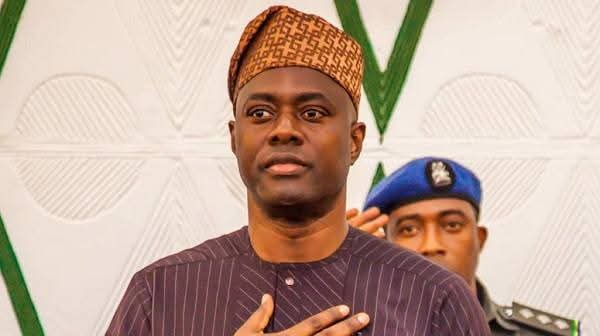
The Oyo State Government has dismissed claims by Chief Jubril Dotun Sanusi that the state has been absent from National Economic Council (NEC) meetings, insisting that Governor Seyi Makinde’s administration has maintained consistent representation through the Deputy Governor, Barrister Bayo Lawal.
The government described Sanusi’s assertion as misleading and based on assumptions rather than verifiable facts, arguing that it disregards established procedures governing representation at the council, which is chaired by the Vice President.
In a statement issued on Thursday, October 15, 2026, and signed by the Governor’s Special Adviser on Media, Dr Sulaimon Olanrewaju, the government said Makinde had formally notified the Vice President that Lawal would henceforth represent Oyo State at NEC meetings.
According to the statement, the arrangement ensures continuity, compliance with established procedures and the state’s full participation in the council’s deliberations.
The government explained that NEC guidelines permit states to be represented by either their governors or deputy governors, adding that several states routinely adopt the same arrangement.
It therefore argued that the absence of Makinde from individual meetings could not be interpreted as the absence of Oyo State from the council’s activities.
The government further maintained that the value of NEC participation extends beyond the physical attendance of a governor, noting that the council provides an important platform for intergovernmental engagement, policy coordination, access to federal development initiatives and the identification of investment and development-financing opportunities.
It listed agriculture, infrastructure, human capital development, digital enterprise, food security and climate resilience among the critical areas covered by NEC deliberations.
According to the statement, these engagements are particularly important to Oyo State’s development agenda, as they strengthen collaboration with the Federal Government and development partners while positioning the state to benefit from relevant national programmes.
The government consequently argued that the effectiveness of a state’s participation should be measured by the quality of its representation, the issues it advances, the opportunities it identifies and the tangible benefits secured for its people, rather than solely by the personal attendance of its governor.
Providing details of Oyo State’s participation, Olanrewaju stated that Lawal had consistently attended NEC meetings since 2025, contributing to discussions and protecting the state’s interests.
He added that the Commissioner for Budget and Economic Planning also participates in the council’s engagements as part of the statutory technical support available to the state.
The government said the combination of political representation by the Deputy Governor and technical input from the commissioner ensures that Oyo State’s positions are adequately presented and supported by the necessary expertise.
It maintained that suggestions that the state had been missing from NEC deliberations ignored both the established structure of representation and the purpose of the council.
The statement further contended that judging the state’s participation exclusively by Makinde’s personal attendance was misleading because it overlooked institutional procedures, technical contributions and the benefits the state continues to pursue through the council.
The government insisted that Oyo State had neither missed development opportunities nor forfeited any benefits or been sidelined in NEC activities.
It also questioned the political context of Sanusi’s comments, noting that although he is a businessman, he had recently taken overt political positions, including openly supporting a political candidate.
According to the government, his remarks could not be considered entirely separate from his political leanings, adding that while citizens were entitled to express their opinions, comments on governance matters should be grounded in facts.
It argued that criticism that disregards institutional procedures and verifiable records does not enlighten the public but risks misleading them.
The government stressed that the central issues should be whether Oyo State is represented at NEC meetings, whether its interests are being advanced and what benefits its people stand to gain.
It maintained that the state had fulfilled its obligations and secured its entitlements on all three counts, warning that attempts to distort the situation for political advantage undermine informed public discourse.
Reaffirming the Makinde administration’s position, the government described Oyo State’s record at the NEC as one of active participation and consistent efforts to advance the interests of its people.
It said the administration would not allow what it characterised as politically motivated or uninformed narratives to overshadow verifiable facts or undermine its work on behalf of the state.
The statement concluded that Oyo State had been fully represented, its voice had been heard and its interests had been protected at every NEC meeting, insisting that the state’s participation should be assessed based on its representation and contributions rather than the governor’s personal attendance.
