

The Federal Government has announced plans to phase out the policy separating Junior Secondary Schools (JSS) from Senior Secondary Schools (SSS), declaring that the arrangement has failed to achieve its intended purpose and has worsened Nigeria’s education challenges, including the alarming number of children dropping out before reaching senior secondary school.
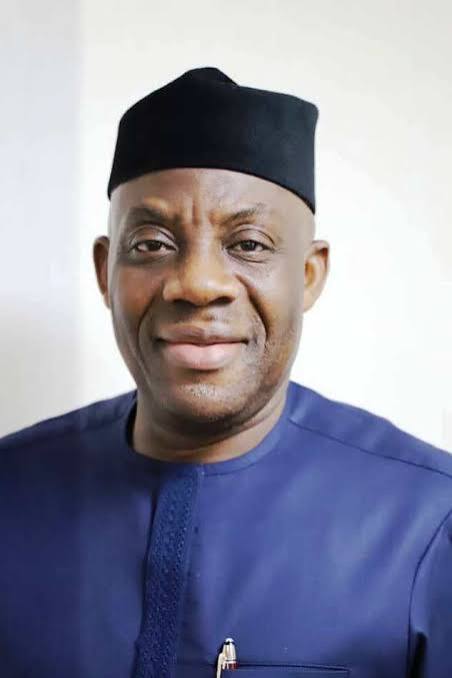
Minister of Education, Dr. Tunji Alausa, disclosed this on Tuesday in Abuja during the inauguration of the Universal Basic Education Commission (UBEC) Ministerial Implementation and Monitoring Committee.
According to the minister, the disarticulation policy, which requires junior and senior secondary schools to operate as separate institutions both physically and administratively, has created an imbalance in the education system, leaving junior secondary schools overcrowded while many senior secondary schools remain underutilised.
He explained that the policy placed greater emphasis on creating administrative positions than addressing the educational needs of Nigerian children, resulting in thousands of students being unable to progress to the next stage of learning.
Alausa revealed that Nigeria currently has about 20 million children dropping out between primary school and junior secondary school, noting that the country has approximately 80,000 public primary schools but only about 15,000 junior secondary schools, creating a ratio of one junior secondary school to every eight primary schools.
“We have 20 million drop out from primary school to JSS. Where are those students? And what we also noticed was that we have 80,000 public primary schools, and junior secondary school, we have just about 15,000. That ratio is one to eight.
“And if you look at the completion rate. So, it’s us as government not doing what we need to do, but the previous government might have failed in this regard, but this government will not fail. We’re fixing this. So, we need to open up as much more opportunities for students to attend these schools, primary schools infrastructure.
“This disarticulation policy has also contributed to this. We’re seeing data from, say, like Kaduna and other northern states, because you have one principal for junior secondary school and another principal for senior secondary schools. We have overflowing JSS, empty senior secondary school.
“So, I can objectively report today that this disarticulation policy has failed. We will phase it out. We can’t be creating positions because we want to create director level for people while we harm our education system. It’s not right. It’s about doing what is good for every Nigerian child,” the minister said.
He stated that the proposal to abolish the policy would be presented at the next meeting of the National Council on Education as part of broader efforts to expand access to education and improve learning outcomes nationwide.
Beyond the policy review, Alausa also inaugurated a high-powered Ministerial Implementation and Monitoring Committee, chaired by Prof. Rashid Aderinoye, to oversee the completion, handover and operation of Smart Schools, Bilingual Schools and Alternative Schools funded by UBEC.
He said the committee would ensure effective implementation and monitoring of the projects to guarantee that they deliver quality education, lamenting that despite substantial investments by UBEC, many of the schools remain incomplete, while several completed projects have not been handed over to state governments or integrated into state education systems.
Describing the situation as a waste of public resources and a denial of learning opportunities for thousands of children, the minister charged the committee to ensure that government investments translate into functional schools.
Earlier, UBEC Executive Secretary, Aisha Garba, said the Federal Government had made significant progress in expanding access to quality basic education through its Smart Schools, Bilingual Schools and Alternative Schools initiatives.
She disclosed that 37 Smart Schools had been established across the country, with 24 already conducting academic activities, while the remaining schools were at various stages of completion, furnishing and operational readiness.
Garba also revealed that under the UBEC–Islamic Development Bank Bilingual Education Programme, 30 schools had been established across nine participating states, with three boarding schools already completed and commissioned, while four others were awaiting commissioning.
She added that the Alternative Schools Programme continues to broaden educational opportunities for out-of-school children through flexible and inclusive learning models.
According to her, the newly inaugurated Ministerial Implementation and Monitoring Committee will monitor project execution, facilitate timely completion and handover of schools, resolve implementation bottlenecks, and ensure that government investments result in fully operational educational institutions.
Speaking on behalf of the committee, Prof. Rashid Aderinoye assured that members would carry out their assignment with diligence, transparency and a strong commitment to results, pledging to closely monitor projects across the country, address delays and ensure that government investments improve access to quality education for Nigerian children.
