

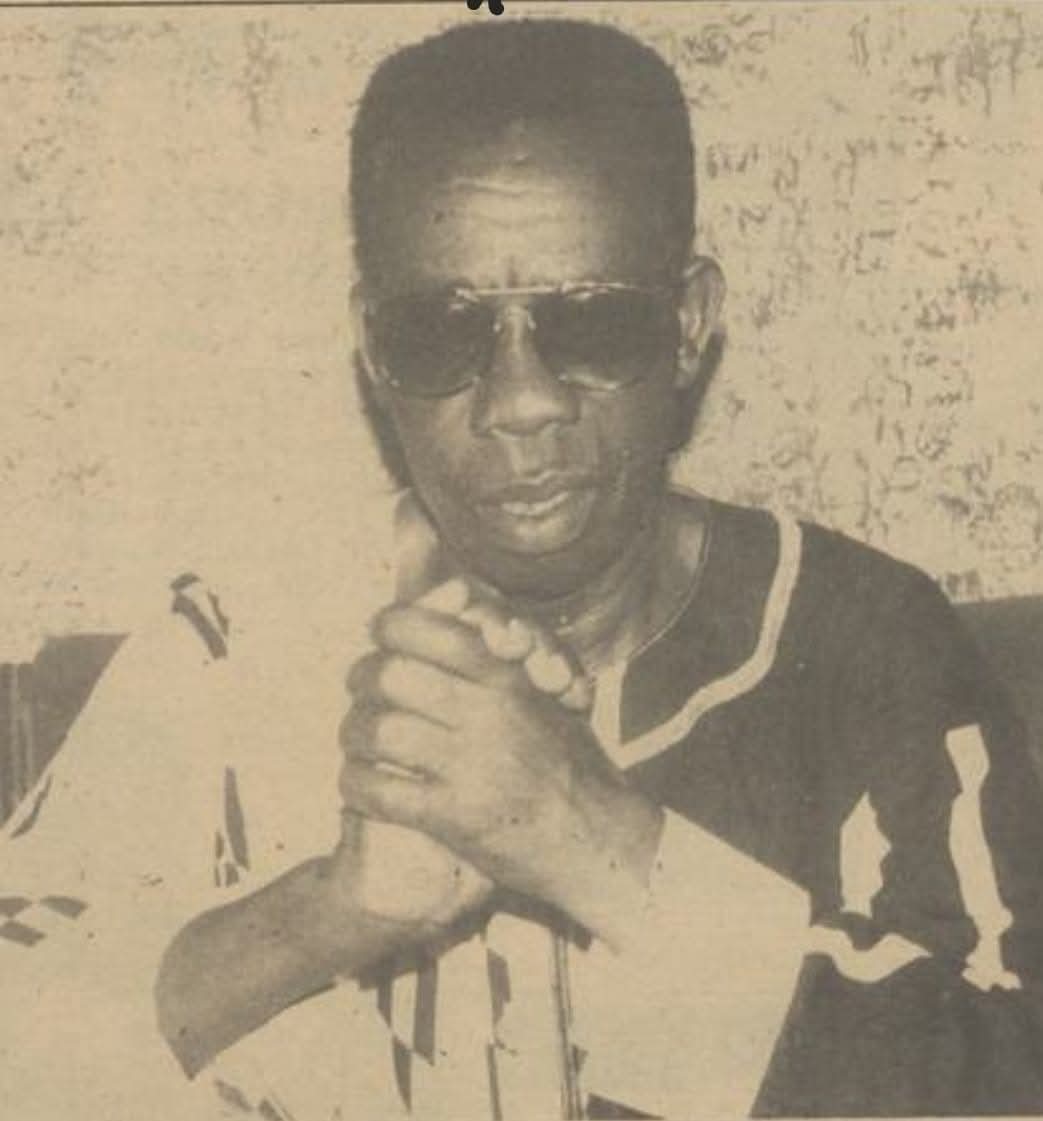
In the early 1960s, he was one of the core musicians who departed Fàtái Rolling Dollar’s band to help Chief Commander Ebenezer Obey form the International Brothers Band. Despite being significantly older than Obey, Ògúnlàdé served as a masterful Bongo drummer and the loyal band captain until Obey’s temporary retirement in 1992.
Beyond the stage, Chief Ògúnlàdé was a successful entrepreneur. He established Bongo Spot, a famous hotel and nightclub that became a sanctuary for Lagos socialites and legendary musicians. His influence was so vast that he commanded the respect of titans across genres, including KSA, Shìná Peters, Ségun Adéwálé, Barrister, Kollington, and Àyìnlá Omowurà.
Ògúnlàdé was more than a drummer; he was a mediator and strategist. He was an adviser to Àyìnlá Omowurà fans club, Omowura would later acknowledge him in the Ẹgbọ́ Tuntun album (Volume 14).
“Ademọ́lá Òṣhowùmí ni dẹrẹ́kitọ̀ (director) nínú ẹgbẹ́ wa, Sámúshìn (Samson) Ògúnlàdé l’adufáìsà (adviser) wa… ẹṣé o, a dúpẹ́ ọjọ́.”
While Ògúnlàdé was pivotal in resolving early disputes between Síkírù Àyìndé Barrister and Ayinla Kollington, he eventually became the unintended centre of a heated musical war between the two.
By 1980, Ògúnlàdé had become the official adviser to Kollington’s band. However, the relationship soured in 1993 when Barrister joined the prestigious Silver Club of Nigeria, thanks to the influence of Ògúnlàdé and their mutual friend, Chief Shittu Sanni. Kollington viewed this alliance as a betrayal and subsequently withdrew from the Bongo Spot, attacking Ògúnlàdé in a song:
“Èmi ò jẹ́ mọ̀ tẹ́lẹ̀ p’ábánijẹ nìwọ́n, áṣé àwọn l’ọ̀lọ̀tẹ̀ tí ńdájá sílèé, Òfófó ilé, òfófó oko Wọ́n ròjọ títí wọ́n gbé bí ẹja. Ṣọ̀tẹ̀ símí nìwọ́n… etc
Disturbed by the insults hurled at his mentor’s band captain, Barrister responded in his track Dimensional Fuji, defending Ògúnlàdé’s honour:

”Ògúnlàdé b’ábá ti rí wọn l’àwa ń pọ́n wọn lé, àwa ò mọ̀ wọ́n l’ẹ́lẹ́dẹ̀ méjì. Àṣé àforẹsùni ni wọn máa jẹ́ o, àwọn afibi-ṣolore a ò ṣewọn wọn ń bú wa lẹ́yìn. Ọlọ́run l’omálédà, Ọlọ́run l’omálédà, Ọba adẹ́kẹ́-dájọ́. Àyìndé ò ṣàṣeyìn o, ẹ yé lépa kádàrá òfo. Àlàbí ò ṣàṣeyìn o, ẹ yé lépa kádàrá òfo. Ògúnlàdé ká f’ọwọ́ wọ́nú, fì wọn sílẹ̀ má jà. Bàbá, ẹnìkan ò gùn’gi kò r’ẹ́yìn ayé rí.”
The lyrical warfare escalated, with Kollington firing back with sharp jabs:
T’ólówé bá mowé tí ò bá le dáhùn, ẹ̀rù ìjà ló ń bà onítọ̀hún ṣe o. Ẹ jẹ́ lọ́ take time o. Ògúnlàdé ṣé ìgbà o, Ògúnlàdé ò ṣọgbọ́n f’ẹ́nì ẹ́leni sílẹ̀ jẹ́jẹ́, o má dà lú rú pọ̀ mọ́ sàpá o…
“Ṣọkọtí ọlọrin, èwó l’ọkàn ẹ kàn Ògúnlàdé, ṣọbọlẹson gbẹ́nu dání kìí ṣ’ọrọ ẹ, ayọnusọ ńdá ẹ lámu tanná wá ẹbí, Àlàbí lónì General òjè sìnmi ẹnu…”
Though Captain Samson Ògúnlàdé eventually reconciled with Kollington, the scars of the public feud remained until his passing. Despite their past differences, Kollington paid his final respects to the “Captain” in a farewell tribute on his album that year.
Sadly, Ògúnlàdé succumbed to throat cancer on February 4, 2000, at the age of 64. He remains remembered as the bridge between generations and the “Captain” who steered the ship of Jùjú and Fuji through turbulent waters.
©️ Soa Olaribigbe Okuboro
