
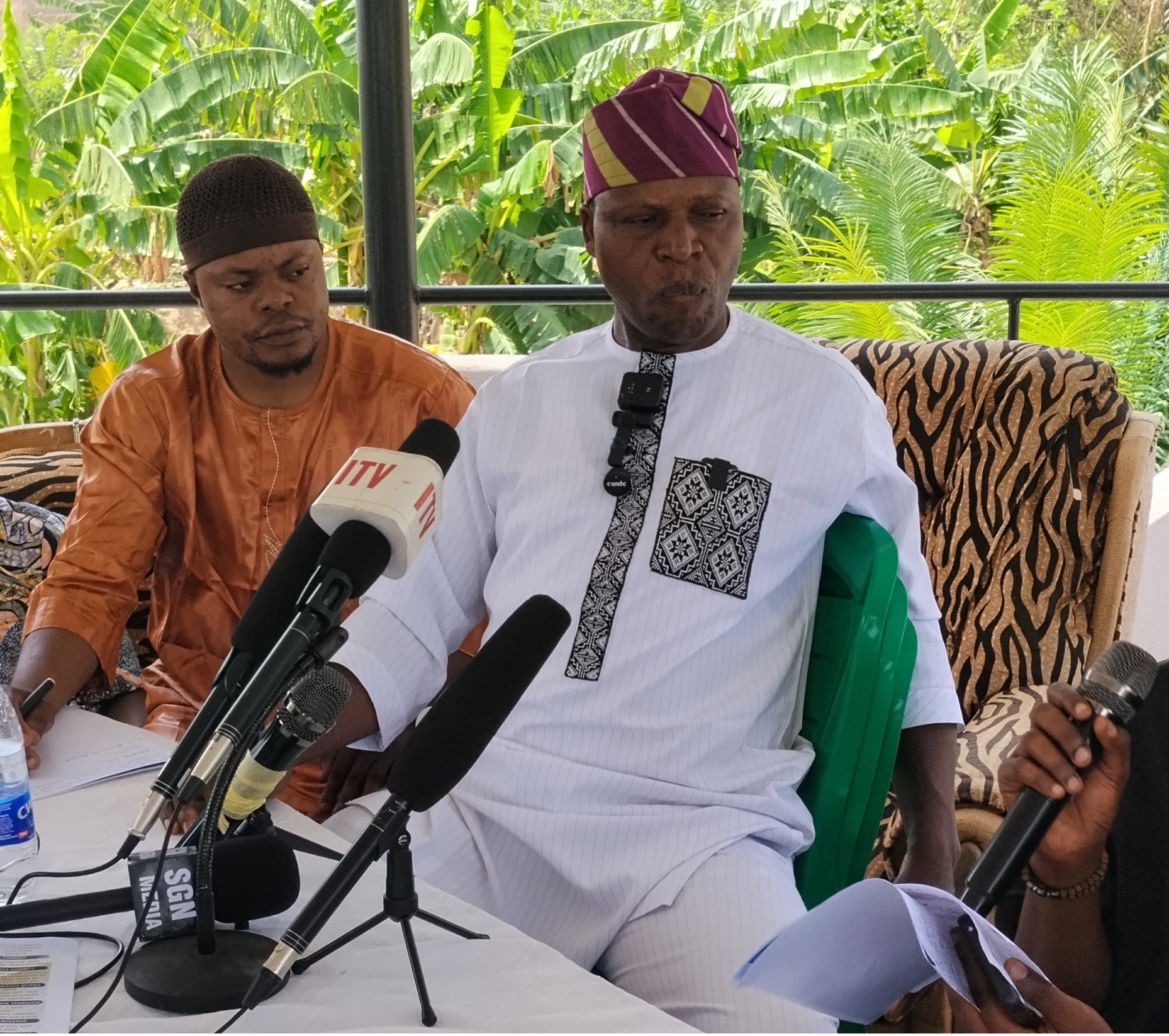
A leading aspirant of the All Progressives Congress for the Atisbo/Saki East/Saki West Federal Constituency, Dr. Yisa Yusuf Muslim, has outlined an ambitious legislative blueprint aimed at transforming infrastructure, education, and governance across the “Old Ifedapo” axis.
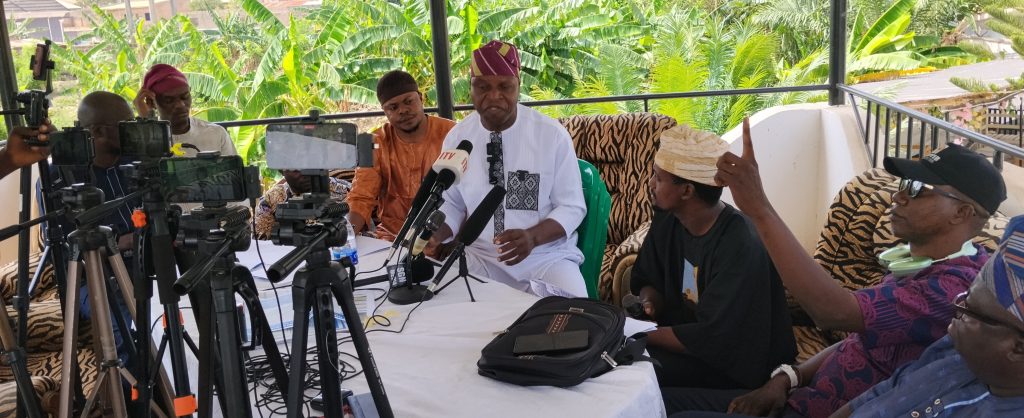
Speaking during a media chat in Saki, Oyo State, the legal practitioner and political strategist said his ambition is driven by legislative drafting expertise and a deep understanding of the challenges confronting the constituency.
He pledged that if given the party’s ticket and elected, he would sponsor at least 20 bills within his first year in office, drawing inspiration from lawmakers in the 10th National Assembly who have sponsored between 40 and 80 bills.
“By the grace of God, within my first year, I will sponsor at least 20 bills specifically tailored to address the problems of this federal constituency,” he said, adding that his focus would be on impactful legislation rather than merely occupying a seat.
On infrastructure, Dr. Muslim described poor road networks as a major barrier to economic activities among the three local governments. He proposed a “Right Angle Triangle” road strategy to improve connectivity, including a direct Saki–Tede route that would reduce travel time to less than 15 minutes, bypassing the Ojawori axis.
He also suggested a direct road linking Saki to Ago-Amodu from Koomi road area, which he said could cut travel time to under 15 minutes, and decried the untarred less than 10-kilometre stretch between Ago-Are and Ofiki, promising to facilitate federal intervention to improve the movement of goods and commuters.
Addressing education and economic development, the aspirant highlighted the need for technical and vocational training, particularly in STEM. He noted that the region currently exports raw cashew and soya products without value addition.
“In Saki, we are just exporting raw cashew and soya, which is a loss. With proper technical education, we can process these into oil, milk, and other premium products, thereby addressing unemployment and boosting the local economy,” he said.
On governance, Dr. Muslim called for reforms to strengthen local government autonomy. While reacting to the Supreme Court of Nigeria judgment on local government autonomy, he argued that financial independence alone is insufficient without administrative control.
He proposed constitutional amendments to remove the powers of State Houses of Assembly over local government finances and structures. He also supported scrapping State Independent Electoral Commissions (SIECs), advocating instead for the Independent National Electoral Commission to conduct local government elections, noting that credible council polls have not been held since 1998 under the current system.
On electricity, he described power supply challenges as the “mother of all infrastructure problems,” calling for diversification beyond the national grid. He urged investment in renewable energy sources such as solar, wind, and small-scale hydro power.
He commended recent constitutional changes placing electricity on the concurrent list, encouraging both state governments and private investors to participate in power generation. He cited a proposed solar project along Barracks Road in Saki as a model that should be implemented to complement existing supply.

“With electricity, we solve 50 per cent of our problems in insecurity, education, and unemployment. What is needed is legislative willpower and technical knowledge,” he said.
Dr. Muslim maintained that his proposed legislative agenda is designed to deliver tangible development and reposition the Old Ifedapo constituency for sustainable growth.
